
Former HKEX CEO Charles Li on Why Crypto’s First Principles Have Changed — and How Its Philosophy Can Radically Expand What Counts as an Investable Asset
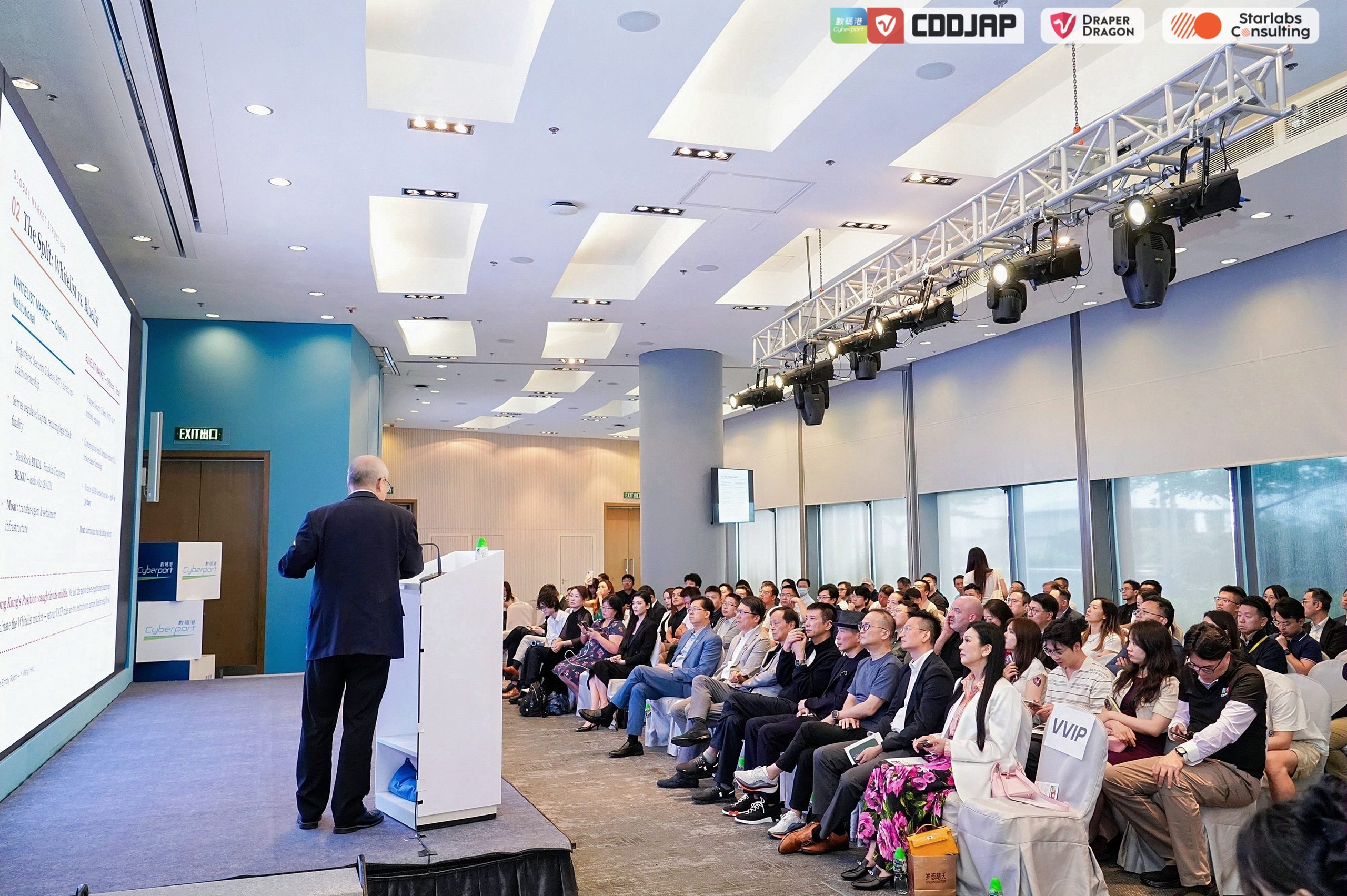
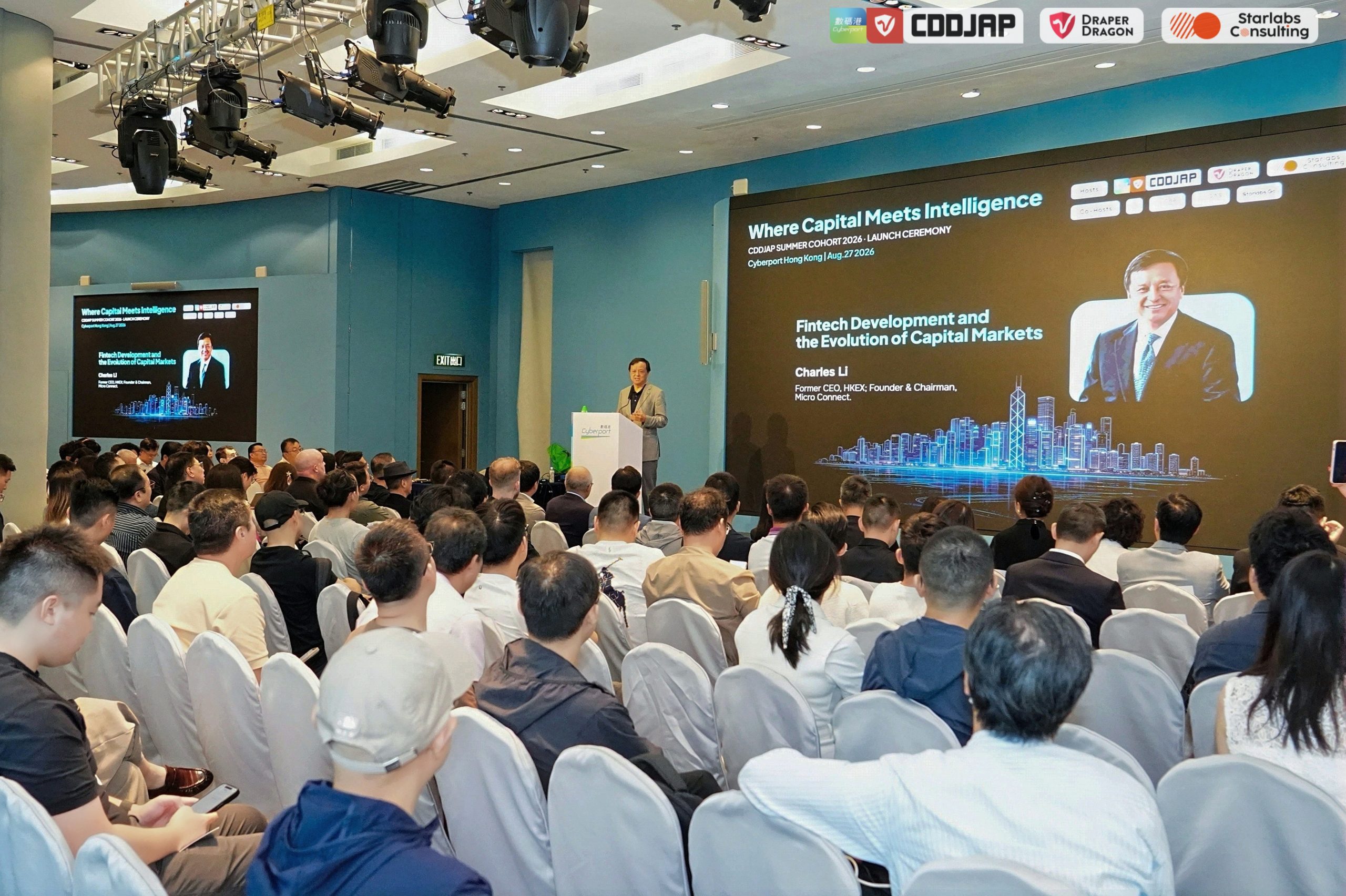
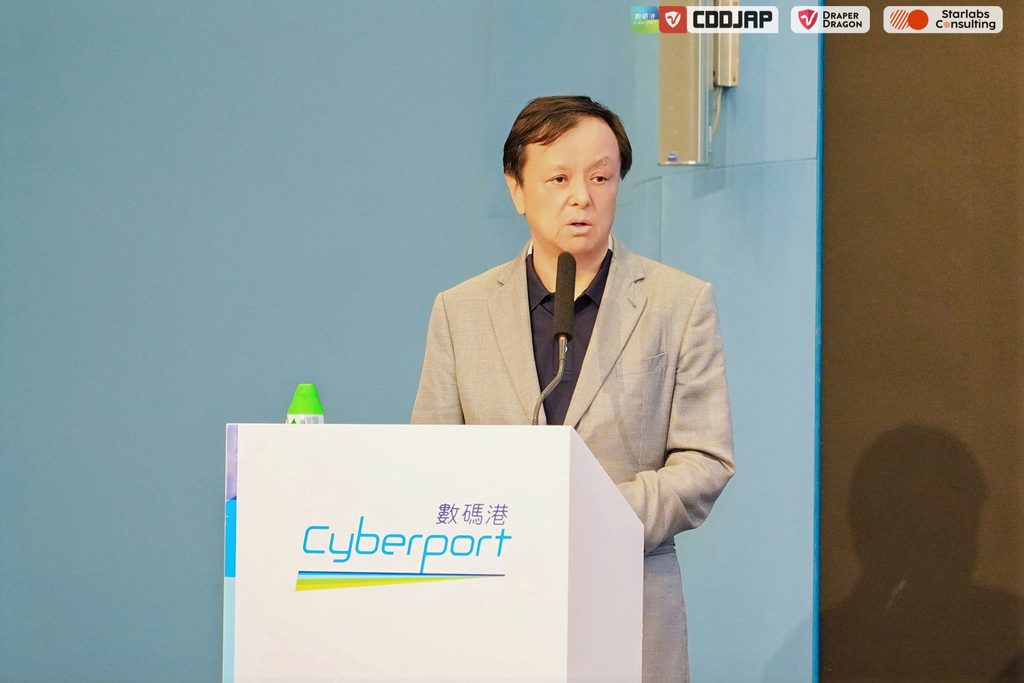
This address was delivered by Charles Li — Former CEO, HKEX | Founder & Chairman, Micro Connect at the CDDJAP 2026 Summer Cohort Launch Ceremony at Cyberport 3, Hong Kong — co-hosted by CDDJAP, Draper Dragon and Starlabs Consulting — where over 300 founders, investors and builders gathered under the theme Where Capital Meets Intelligence. Read our full recap of the launch ceremony here.
Li’s talk took direct aim at the assumption that crypto’s growth story can simply continue on autopilot. The capital tailwinds that powered the industry’s rise over the past decade — unregulated inflows from the West chasing yield, and from China seeking an exit — are, in his reading, both structurally ending. His response wasn’t to write the industry off, but to argue for carrying crypto’s philosophy, not its price action, into a far larger and largely untapped pool of assets sitting inside traditional finance — the premise behind Micro Connect’s new venture, NUMA. The full address is below.
Crypto’s First Principles Have Changed, But Its Philosophy Can Be Used to Radically Expand the Underlying Assets Available for Investment
First, congratulations on the launch of CDDJAP Accelerator’s second cohort! Most of the friends in the room today either come from the crypto industry or are actively building within it — so I want to begin with a broader historical trend in crypto.
Crypto’s original intent was to build a more egalitarian society, one whose disruptive target was the fiat currency systems of both China and the United States. However, as geopolitical conflict intensifies and the U.S. shifts its strategy to treat crypto as a strategic weapon, the industrial logic of crypto is undergoing a fundamental transformation.
We know that the shared foundation of value across every product in the crypto world has been the continuous inflow of capital from the fiat world. That inflow has been the primary support behind crypto’s price growth since its inception. But now that the U.S. has chosen to treat crypto as a strategic weapon, this foundation of shared interest is changing in kind. When Western institutions such as BlackRock and JPMorgan enter the crypto space, they are, in essence, applying the methodologies of the traditional financial world to hunt for high-margin opportunities in a new one. This means the rules of the game in crypto are set to change substantively — and once these institutions enter at scale, today’s major crypto holders may find themselves unable to compete with them.
At the same time, we also know that over the past decade or more, crypto’s growth has relied heavily on unregulated capital flowing out of China. Protected by a state-owned banking system and national credit, ordinary Chinese savers have historically had a relatively weak sense of risk — and this provided a continuous source of capital for the crypto world. But that era, too, has now ended. China’s current economic foundation is one of tightening capital controls and the redistribution of existing capital stock; the great tide of Chinese capital flowing overseas or into crypto is now receding. As a result, RWA, stablecoins, and every other tool that could be viewed as a channel for capital flight are seeing the original logic behind their growth come to an end. If this is an ebbing tide rather than a rising one, then crypto’s first principles have changed.
That said, while the underlying logic of crypto’s growth is shifting, we remain highly convinced by crypto’s operating philosophy — decentralization, extremely granular information disclosure, immutable and irreversible record-keeping, and a genuinely effective connection between the real economy and finance. The project we founded, NUMA (Micro Connect New Markets), is precisely an effort to bring crypto’s core methodology down into the capillaries of traditional finance.
We know that the underlying assets available in traditional finance are, in fact, extremely limited. Nominally, there are only around 20,000 listed companies in the entire world — and the number that actually trade with any real liquidity is far smaller. Investors are, in effect, circling around inside a very small pool. Our approach is to move beyond the company as the sole unit of securitization, and instead use the commercial contract as the underlying asset. Any contract — so long as it already has a first-money investor (a landlord, a franchisee, a supply-chain partner) and can generate cash flow — can become a base asset for securitization. In practice, we securitize each contract into what we call “PCC” (thousand-yuan Micro Connect Certificates) — for example, a 100,000-yuan investment corresponds to 100 certificates of 1,000 yuan each — achieving tokenization at the level of the individual contract.
At the same time, we operate entirely within the existing regulatory framework and through licensed institutions. We are not shaking the foundations or the order of traditional finance — we are reforming it from its deepest layer. The “bible” of traditional investing is the Sharpe ratio: for every unit of risk an investor takes on, they should demand more than one unit of return in exchange; a ratio above 1 is considered a good investment. We carry this same logic forward. We generate a multi-dimensional Sharpe ratio for every single contract, updated daily. Investors can set their total investment amount, their degree of diversification (say, spreading 1 million yuan across 1,000 contracts), and their minimum acceptable Sharpe ratio, to define their own portfolio-screening criteria — and our system then scans every contract in the pool to match each investor with a portfolio that fits their conditions. If the criteria are too strict and yield no match, the investor can simply adjust their parameters or wait.
It’s clear that this model requires processing an enormous volume of high-frequency, highly dispersed calculations — and it has to be recalculated down to the most granular level, every single day. Without AI, this would take tens of thousands of people to execute, and relying on human labor simply would not be viable. That is precisely why we were nearly at a standstill last year. It was only this year, with the emergence of agentic AI, that this vision was finally able to land. We feel genuinely fortunate to be living through the AI era — thirty years ago, we caught the dividend of reform and opening-up; today, AI is letting us set off again.
As the era in which crypto’s growth depended on capital inflows comes to an end, we need to rethink its first principles. New Market’s approach is this: use the philosophy of crypto to transform the foundations of traditional finance — with the contract as the underlying unit, the Sharpe ratio as the yardstick, and AI as the engine — to achieve a radical expansion of the assets available for investment.
This is part of our ongoing recap series from the CDDJAP 2026 Summer Cohort Launch Ceremony. Read the full event recap here — more standalone speaker features are coming over the next few weeks.