


Global Crypto Adoption Top 30 Regions: 2025 Regulatory Developments and 2026 Policy Outlook (Part II)
Last week, Starlabs Consulting published “Global Crypto Adoption Top 30 Regions: 2025 Regulatory Developments and 2026 Policy Outlook (Part I)”, reviewing regulatory developments across 15 jurisdictions. Today, we continue with the remaining 15 regions
16. Canada 🇨🇦
| 2025 Cryptocurrency Adoption Ranking | #25 |
| Lead Regulatory Authority | Canadian Securities Administrators (CSA); Financial Transactions and Reports Analysis Centre of Canada (FINTRAC) |
| Regulatory Landscape | AML registration required for virtual currency dealers since June 2019; AML registration required for crypto trading platforms since March 2021 |
Canada’s crypto regulatory framework remained broadly stable in 2025. However, stablecoin oversight tightened following the full implementation of CSA Staff Notice 21-333 after the transitional period ended on December 31, 2024. Under the new rules, only fiat-backed stablecoins pegged to the Canadian dollar or US dollar—fully reserved, redeemable at par, and held with qualified custodians—are permitted. Prior to the deadline, Circle’s USDC became the first stablecoin to meet these requirements. In June, Canadian fintech Stablecorp announced plans for QCAD to comply, positioning it as Canada’s first regulated domestic stablecoin. Meanwhile, FINTRAC and the Royal Canadian Mounted Police continued enforcement actions against unlicensed platforms and domestic fraud schemes.
In November, Canada confirmed plans to formally integrate stablecoins into its regulatory framework as part of a broader payments modernization initiative, with implementation led by the Bank of Canada. The central bank has previously expressed concern that Canada is lagging global peers in payments innovation and emphasized regulation as a prerequisite for the safe adoption of new technologies. It also distinguished stablecoins from other cryptoassets, acknowledging their payment utility and growing global use. The Bank of Canada will receive CAD 10 million (USD ~7 million) over the next two years to support the forthcoming stablecoin regulatory regime.
17. Australia 🇦🇺
| 2025 Cryptocurrency Adoption Ranking | #32 |
| Lead Regulatory Authority | Australian Transaction Reports and Analysis Centre (AUSTRAC), Australian Securities and Investments Commission (ASIC) |
| Regulatory Landscape | AML registration required for digital currency exchanges (DCEs) since April 2018; Licensing required for certain crypto assets classified as financial products since September 2017 |
After a slowdown in 2024, Australia’s crypto regulation regained momentum in 2025, marked by a notable shift in government posture. In addition to consumer protection and scam prevention, fostering an innovation-friendly regulatory environment became a stated priority.
Digital Asset and Stablecoin Regulation
Two long-awaited legislative proposals were released in 2025:
- September: Treasury consulted on a digital asset regulatory framework that would bring digital asset platforms and tokenized custody platforms under the Australian Financial Services Licence (AFSL) regime, supervised by ASIC.
- October: Treasury consulted on the first tranche of payments reform legislation, including a licensing framework for stablecoins. Under the proposal, single-currency stablecoins would be regulated as tokenized stored-value facilities, requiring issuers and service providers to hold an AFSL.
Licensing and Exemptions
ASIC continued engagement with industry participants regarding AFSL applications under existing law. It revised INFO 225, clarifying that a range of digital assets—including exchange tokens, tokenized securities, and stablecoins—require AFSL authorization.
ASIC emphasized its goal of providing regulatory clarity so firms can “innovate with confidence in Australia.” Transitional relief applies until June 30, 2026, during which ASIC will not take enforcement action against firms undertaking licensable digital asset activities, allowing time to assess obligations and apply for licenses. ASIC also plans licensing exemptions for distributors of stablecoins and wrapped tokens issued by AFSL holders.
Strengthening AML Oversight
AUSTRAC warned crypto ATM operators, took enforcement action against non-compliant providers, and imposed a AUD 5,000 per-transaction cap. Australia is now the world’s third-largest crypto ATM market, and data showed these machines were disproportionately used in scams.
AUSTRAC also launched “use it or lose it” blitz actions against exchanges, with dormant entities facing deregistration. This is expected to benefit compliant, active operators and improve overall market trust.
In 2026, further payments reform details are expected, including safeguarding requirements, exemptions, exclusions, and transitional arrangements. The FATF Travel Rule will take effect in March 2026, increasing transparency for inter-exchange virtual asset transfers.
18. European Union 🇪🇺
| Lead Regulatory Authority | European Banking Authority (EBA); European Securities and Markets Authority (ESMA) |
| Regulatory Landscape | Stablecoin issuers subject to MiCA since June 2024; CASPs subject to MiCA since December 2024 |
MiCA
2025 marked the transition of MiCA from policy design to implementation. On December 31, 2024, MiCA obligations for CASPs entered into force alongside Travel Rule requirements. In January 2025, ESMA issued supervisory briefings to assist national competent authorities (NCAs) and began publishing registers of authorized and non-compliant entities.
According to Starlabs Consulting, 142 CASPs have received MiCA authorization to date, including OKX, Bybit, and KuCoin. ESMA has also named 101 unauthorized entities, including CoinBank Exchange and HTXcoin.
ESMA and the European Commission issued guidance on the treatment of non-MiCA-compliant stablecoins, granting CASPs a transition period until the end of Q1 2025. NCAs were required to ensure that non-compliant ARTs and EMTs ceased public offering or trading by that deadline, while allowing “sell-only” channels during the wind-down.
As MiCA took effect, divergences in national supervisory approaches became more visible. In September, regulators from France, Austria, and Italy jointly called for a stronger EU-level framework, citing significant differences in how crypto markets are supervised across member states.
Early 2025 discussions around a potential MiCA II—particularly to cover DeFi—faded by mid-year, as the EU shifted focus to consolidating the existing framework and strengthening enforcement rather than revising the legislation.
DORA
On January 17, 2025, the Digital Operational Resilience Act (DORA) entered into force across the financial sector. DORA imposes unified ICT risk management, incident response, testing, and third-party resilience obligations on financial institutions and certain ICT providers. As cyberattacks grow in complexity, DORA introduces significant new compliance requirements for crypto firms.
AML/CTF
The EU Anti-Money Laundering Authority (AMLA) identified cryptoassets as a supervisory priority, citing fragmented AML/CTF standards across member states as a structural vulnerability. From 2028, some CASPs may fall under AMLA’s direct supervision.
The EBA’s fifth biennial ML/TF risk assessment highlighted crypto-related threats, noting that the number of authorized CASPs increased 2.5x between 2022 and 2024, while persistent weaknesses remained in AML/CTF systems, KYC, and risk management.
Sanctions Enforcement
In 2025, the EU intensified crypto-related sanctions. In February, it sanctioned Garantex, marking the first time a crypto exchange itself was designated. Subsequent sanctions packages further restricted Russian residents’ access to crypto platforms and trading.
Digital Euro
Concerns persisted over whether the digital euro can remain competitive in a payments ecosystem dominated by USD stablecoins. In July 2025, the ECB acknowledged this challenge, warning that Europe must ensure its CBDC remains competitive amid increasing digital currency choice. However, no concrete design changes were announced, with policymakers reiterating “resilience, trust, and autonomy” as guiding principles—suggesting the project remains in a strategic rather than implementation phase.
Outlook
2025 was a pivotal year for EU crypto policy. While implementation progressed, divergent national approaches underscored the challenge of maintaining regulatory consistency. In 2026, attention will focus on supervisory convergence and coordination.
From January 1, 2026, the EU’s DAC8 directive on crypto tax transparency will take effect, mandating information exchange among member states and aligning with the OECD’s Crypto-Asset Reporting Framework (CARF).
19. France 🇫🇷
| 2025 Cryptocurrency Adoption Ranking | #34 |
| Lead Regulatory Authority | Autorité des marchés financiers (AMF); Autorité de contrôle prudentiel et de résolution (ACPR) |
| Regulatory Landscape | Stablecoin issuers subject to MiCA since June 2024; CASPs subject to MiCA since December 2024 |
France began transitioning from its national regime to MiCA in early 2025. By January, eight CASPs had obtained MiCA authorization. In February, France issued a decree aligning the Monetary and Financial Code with MiCA, establishing a structured transition path for existing providers through 2026.
Throughout the year, France emerged as one of MiCA’s strictest enforcers. According to Starlabs Consulting, the AMF has issued 11 MiCA licenses, including to Caceis Bank, CoinShares, and Bitstack.
The AMF, together with regulators from Austria and Italy, called for stronger EU-level supervision and tighter oversight of cross-border activities to prevent regulatory arbitrage.
Domestically, compliance requirements were strengthened. In April, the AMF issued Position DOC-2025-02, incorporating EBA guidance on internal controls and AML/CTF for CASPs; in July, it adopted ESMA’s crypto market abuse guidelines. Amendments to the Monetary and Financial Code also established a framework for crypto-asset pledging, signaling France’s intent to integrate digital assets into mainstream financial law.
On enforcement, the AMF continued blacklisting unlicensed platforms and investigating major exchanges. In January 2025, French investigators reportedly accused Binance of money laundering, tax fraud, and related offenses.
France and Germany further deepened coordination under their Joint Economic Agenda, updated in August 2025, reaffirming support for the digital euro as a cornerstone of European monetary sovereignty while emphasizing privacy, stability, and democratic legitimacy. The agenda also supported wholesale settlement of tokenized assets in central bank money and committed to fostering a strong MiCA-compliant European crypto market.
France’s MiCA implementation has been steady and institution-focused: regulatory certainty is high, but only for firms willing to meet elevated compliance standards.
20. Netherlands 🇳🇱
| 2025 Cryptocurrency Adoption Ranking | #43 |
| Lead Regulatory Authority | Authority for the Financial Markets (AFM); De Nederlandsche Bank (DNB) |
| Regulatory Landscape | Stablecoin issuers subject to MiCA since June 2024; CASPs subject to MiCA since December 2024 |
The Netherlands adopted the EU’s shortest MiCA transition period—six months, ending June 30, 2025—and launched an intensive licensing effort. It became the first EU member state to issue MiCA licenses, granting four CASP licenses on MiCA’s effective date (December 30, 2024) to MoonPay, BitStaete, ZBD, and Hidden Road, followed by licenses for 18 CASPs in 2025, including One Trading and Bitvavo.
Dutch MiCA licenses account for over 20% of EU approvals, second only to Germany, reflecting both AFM’s preparedness and its ambition to position the Netherlands as a trusted jurisdiction for compliant digital asset activity.
Regulators also intensified focus on AML/CTF under the Wwft. On May 2, 2025, AFM issued CASP-specific guidance clarifying expectations for customer due diligence, transaction monitoring, beneficial ownership verification, and suspicious activity reporting—signaling that crypto regulation is converging with broader financial sector standards.
AFM and DNB have maintained constructive engagement with fintechs through sandboxes, pre-licensing dialogues, and consultations, while emphasizing that innovation must be matched by governance discipline. This balance has made the Netherlands one of the first EU jurisdictions to combine MiCA clarity with market dynamism.
In 2026, attention will turn to how the Netherlands consolidates its first-mover advantage through supervisory practice, guidance refinement, and EU-level coordination.
21. Malaysia 🇲🇾
| 2025 Cryptocurrency Adoption Ranking | #44 |
| Lead Regulatory Authority | Securities Commission Malaysia (SC) |
| Regulatory Landscape | Licensing for digital asset exchanges since January 2019; Licensing for IEO operators and digital asset custodians since October 2020 |
In 2025, Malaysia took several steps to support digital asset innovation:
- June: Prime Minister Anwar Ibrahim launched the Digital Asset Innovation Hub, signaling strong political support. The hub aims to enable experimentation in programmable payments, ringgit-backed stablecoins, and supply-chain finance.
- July: The SC proposed streamlining exchange token listing processes. Exchanges would no longer require SC approval to list new tokens, provided tokens meet prescribed standards and have traded for at least one year on FATF-compliant VASPs. At the same time, the SC plans to strengthen custody, governance, and financial requirements to enhance investor protection and resilience.
22. Taiwan (China)
| 2025 Cryptocurrency Adoption Ranking | #47 |
| Lead Regulatory Authority | Financial Supervisory Commission (FSC) |
| Regulatory Landscape | Registration regime for virtual currency platforms and trading businesses since July 2021 |
In 2025, Taiwan consolidated its regulated VASP sector. Amendments to AML rules in November 2024 expanded the scope and tightened registration requirements, with transitional arrangements allowing continued operation during review. In September 2025, the FSC announced that only 9 of 27 VASPs passed compliance reviews; the remaining 18 were required to cease regulated services.
The FSC also advanced comprehensive crypto legislation. In March 2025, it released a draft Virtual Asset Service Act, proposing a full licensing framework for exchanges, brokers, custodians, and token underwriters. All VASPs would be required to establish local entities and maintain paid-in capital of TWD 10 million to 300 million (USD ~0.3–9 million). Only licensed entities could use “virtual asset” terminology in their names.
Domestic stablecoin issuers would require special licenses and meet full-reserve, par-redemption, and audit requirements. Qualified VASPs could offer foreign stablecoins, subject to listing standards and issuer transparency.
In November, Taiwan’s central bank issued its first public comments on stablecoins, supporting regulation while warning of potential disruption to traditional payment systems and risks of money laundering and fraud. It confirmed close coordination with the FSC on reserve asset and FX rules, drawing on US and EU frameworks.
On custody, the FSC launched a pilot on January 1, 2025, allowing banks to provide virtual asset custody. By August, major banks including Cathay United Bank and CTBC were approved to offer custody services.
In 2026, attention will focus on the progress of the Virtual Asset Service Act.
23. Hong Kong 🇭🇰
| 2025 Cryptocurrency Adoption Ranking | #53 |
| Lead Regulatory Authority | Securities and Futures Commission (SFC); Hong Kong Monetary Authority (HKMA) |
| Regulatory Landscape | Licensing required for virtual asset trading platforms (VATPs) since June 2023; Licensing required for stablecoin issuers from August 2025 |
Licensing Developments
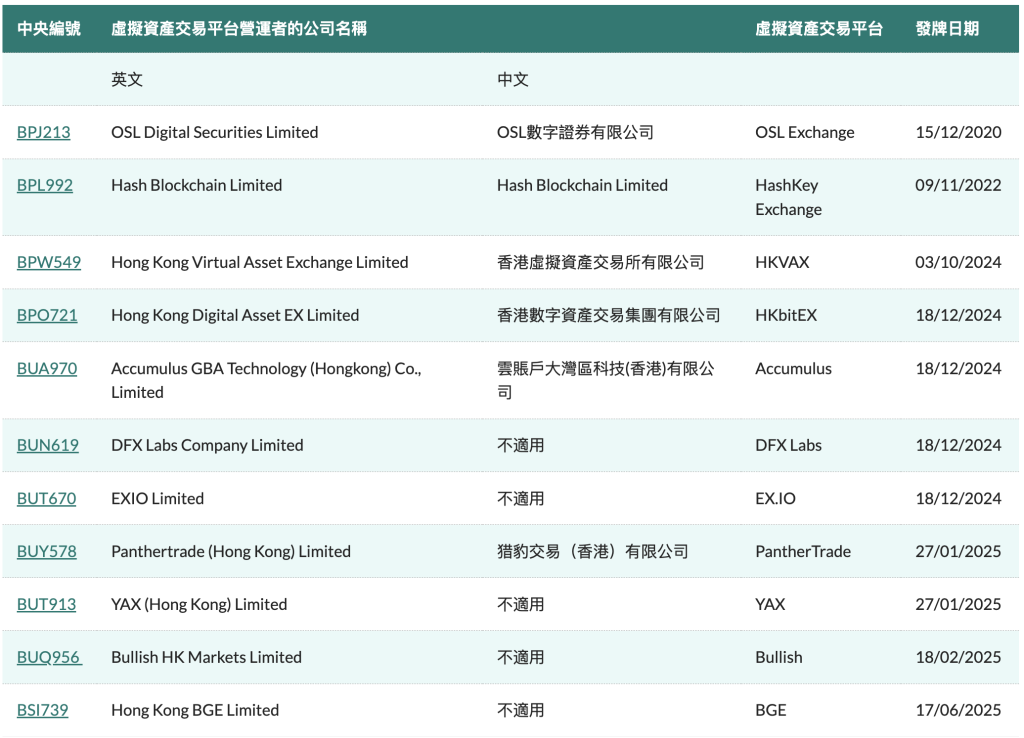
2025 was another active year for Hong Kong regulators. In January, the SFC introduced an expedited VATP licensing process, replacing on-site inspections with assessments by SFC-approved external evaluators. Four additional local platforms were licensed, bringing the total to 11 licensed VATPs.
ASPIRe Roadmap
In February, the SFC released the ASPIRe roadmap, aiming to position Hong Kong as a global crypto hub. A central commitment was to revisit custody rules requiring 98% of client crypto assets to be held in local cold wallets—among the world’s strictest standards. The SFC acknowledged operational challenges and committed to a “technology-neutral, outcome-based” approach. The roadmap also proposed licensing regimes for OTC trading and custody, and expanding the range of products and services offered by licensed firms.
Key milestones followed:
- April: Approval for licensed VATPs to offer staking
- July: Consultation on trading (including OTC) and custody frameworks
- August: Proposal to strengthen custody rules while enabling “more advanced custody technologies”
- November: Permission for VATPs to share order books with qualified overseas affiliates and relaxed token access rules for professional investors
In June, the government released Hong Kong Digital Asset Development Policy Statement 2.0, adding RWA tokenization and stablecoin initiatives.
Stablecoin Regulation
Hong Kong drew global attention as an early mover on stablecoin regulation. The Stablecoin Ordinance took effect on August 1, 2025, requiring all fiat-referenced stablecoin (FRS) issuers operating in or actively marketing to Hong Kong to be regulated by the HKMA. Retail offerings are permitted only under this framework.
Existing issuers must apply by October 31, 2025, or cease operations within one month. Issuers demonstrating a “reasonable prospect” of compliance may receive temporary licenses until February 1, 2026.
As of September 1, the HKMA had received 77 expressions of interest, but expressed concern over applicants’ lack of concrete plans and real-world use cases. The HKMA indicated that only a small number of licenses would ultimately be granted.
In 2026, market attention will focus on whether these policy initiatives translate into Hong Kong’s ambition to become a leading crypto financial hub.
24. United Arab Emirates 🇦🇪
| 2025 Cryptocurrency Adoption Ranking | #64 |
| Lead Regulatory Authority | CBUAE; SCA; VARA; ADGM FSRA; DIFC; DFSA |
| Regulatory Landscape | Licensing regimes introduced progressively since 2018 at federal and free-zone levels |
In 2025, the UAE made major strides toward an integrated national digital asset strategy encompassing stablecoins, tokenization, and AML.
CBUAE’s Payment Token Services Regulation, issued in June 2024, became fully effective after the transition period. Domestic payments are restricted to dirham-denominated stablecoins issued by licensed entities, prohibiting foreign-currency or algorithmic stablecoins. This spurred compliant innovation, including AE Coin, the first regulated dirham stablecoin, and projects by First Abu Dhabi Bank and ADQ.
In ADGM, FSRA issued Consultation Paper No. 9 of 2025, proposing to expand the regulation of fiat-referenced tokens to include custody, intermediation, and regulated use—potentially laying the groundwork for stablecoin categorization in 2026.
At the federal level, the SCA finalized frameworks for security and commodity tokens, embedding tokenization within existing securities law and restricting trading and settlement to licensed venues or approved wallets, subject to strict AML and finality rules.
AML and sanctions enforcement intensified nationwide, with fines imposed on exchanges and insurance brokers. The EU voted to remove the UAE from its AML “high-risk” list, enhancing international credibility.
VARA published its Rulebook 2.0 in May 2025, expanding governance and reporting requirements and signaling a shift from sandbox experimentation to mature supervision. VARA also stepped up enforcement against unlicensed operators, issuing cease-and-desist orders and penalties. As of now, VARA has listed 21 unlicensed VASPs and conducted 38 enforcement actions.
Collectively, these measures mark the UAE’s transition from fragmented experimentation to integrated regulation, positioning it as the Middle East’s most comprehensive and internationally credible crypto regulatory environment.
25. Singapore 🇸🇬
| 2025 Cryptocurrency Adoption Ranking | #72 |
| Lead Regulatory Authority | Monetary Authority of Singapore (MAS) |
| Regulatory Landscape | Licensing for Digital Payment Token (DPT) services since January 2020; Licensing for offshore digital token services from June 2025 |
In 2025, MAS continued to balance “responsible innovation” with “strong regulation.”
Financial Services and Markets Act (FSMA)
Through FSMA licensing provisions effective June 30, 2025, MAS expanded oversight to digital token service providers (DTSPs) operating both domestically and offshore. DTSPs with substantive operations in Singapore must be licensed and comply with AML/CTF obligations—even if serving only overseas markets.
MAS emphasized that entities based in Singapore but serving only foreign clients are unlikely to be licensed due to heightened ML/TF risks and limited supervisory reach. This eliminated regulatory arbitrage and prompted exits by firms such as Bybit, raising questions about Singapore’s Web3 positioning.
Licensing under the Payment Services Act continued steadily, with eight new licenses issued in 2025, bringing the total to 36.
Stablecoin regulation
MAS plans to consult on legislative amendments introducing a voluntary stablecoin issuance regime under the Payment Services Act. Compliant stablecoins would carry a “MAS-regulated stablecoin” label; all others would remain regulated as DPTs. MAS has already issued DPT licenses to three issuers meeting substantive requirements.
MAS requires regulated stablecoins to be issued in Singapore but has signaled openness to cross-border regulatory cooperation. In October, Deputy Prime Minister Gan Kim Yong noted MAS was closely monitoring progress on the US GENIUS Act and exploring safe cross-border use of regulated stablecoins.
MAS continues to collaborate with industry on three “safe settlement assets”: regulated stablecoins, tokenized bank liabilities, and CBDCs. In October, MAS launched Project BLOOM to advance settlement using tokenized bank deposits and regulated stablecoins. It also announced pilots for tokenized treasury bill issuance following wholesale SGD CBDC tests.
26. Austria 🇦🇹
| 2025 Cryptocurrency Adoption Ranking | #74 |
| Lead Regulatory Authority | Financial Market Authority (FMA) |
| Regulatory Landscape | Stablecoin issuers subject to MiCA since June 2024; CASPs subject to MiCA since December 2024 |
Austria clarified its MiCA implementation path in 2025. With the grandfathering period ending in December 2025, eight CASPs have obtained MiCA authorization. Existing CASPs without licenses by December 31, 2025 must cease regulated services.
FMA Executive Director Eduard Müller highlighted MiCA’s “cleansing effect,” citing prior AML registration experience where only a small fraction of 79 applicants retained eligibility.
In September 2025, Austria joined France and Italy in calling for strict and consistent MiCA enforcement across the EU.
In 2026, attention will focus on Austria’s supervisory approach and its stance on MiCA passporting.
27. Switzerland 🇨🇭
| 2025 Cryptocurrency Adoption Ranking | #76 |
| Lead Regulatory Authority | Swiss Financial Market Supervisory Authority (FINMA) |
| Regulatory Landscape | Licensing required for crypto asset businesses since August 2019 |
In 2025, Switzerland continued to balance innovation support with risk-based supervision. FINMA reiterated its technology-neutral, risk-based approach in its 2024 annual report.
In March 2025, FINMA granted the first license to a DLT trading facility—BX Digital, a subsidiary of Börse Stuttgart—under Switzerland’s 2021 DLT Act, designed to provide a solid legal foundation for innovation. FINMA highlighted key clarifications around business continuity and operational risk, particularly for public blockchains and smart contracts.
Swiss financial institutions advanced digital asset initiatives: in September, the Swiss Bankers Association, PostFinance, Sygnum, and UBS completed a CHF deposit token PoC; in October, UBS announced plans to develop a G7-focused, multi-issuer stablecoin.
In October 2025, Switzerland proposed amendments to the Financial Institutions Act, introducing two new digital-asset-specific licenses: a payment instrument institution license for stablecoin issuers and a crypto institution license for CASPs, replacing the fintech license. Consultation runs until February 2026.
On tax transparency, Switzerland adopted OECD CARF-aligned information exchange rules effective January 1, 2026, aligning with the EU’s DAC8.
28. El Salvador 🇸🇻
| 2025 Cryptocurrency Adoption Ranking | #86 |
| Lead Regulatory Authority | National Commission of Digital Assets (CNAD) |
| Regulatory Landscape | Registration required for Bitcoin Service Providers since September 2021; Registration required for Digital Asset Service Providers (DASPs) since August 2023 |
As the first country to adopt Bitcoin as legal tender, El Salvador remained under close scrutiny.
In January 2025, legislation removed the mandatory requirement for merchants to accept Bitcoin, making acceptance voluntary—a concession linked to a USD 1.4 billion IMF loan, which also restricted public-sector Bitcoin activity.
Regulatory efforts continued. CNAD issued 26 DASP licenses in 2025, bringing total licensed DASPs to over 600, and warned against unauthorized operations lacking viable business plans or AML/CTF compliance.
CNAD also signed a cooperation agreement with the Central Bank of Bolivia, covering blockchain analytics and risk assessment.
In August 2025, new legislation allowed regulated financial institutions to apply for DASP licenses, enabling institutional adoption. Eligibility is limited to investment banks with at least USD 50 million in capital, serving investors with over USD 250,000 in liquid assets.
29. Seychelles 🇸🇨
| Lead Regulatory Authority | Financial Services Authority (FSA) |
| Regulatory Landscape | Licensing required for VASPs since August 2024 |
In 2025, Seychelles significantly tightened VASP regulation. Historically a popular registration hub with over 100 registered VASPs, Seychelles enacted the VASP Act in August 2024, granting the FSA licensing and enforcement authority over VASPs, ICOs, and NFTs. Operating mining facilities, mixing services, or engaging in virtual asset activity as an individual was criminalized.
The transition period ended in December 2024. All VASPs failing to apply by December 31 were required to cease operations. No licenses have yet been issued; 14 VASPs, including Bybit, remain under review—highlighting the regulator’s cautious stance.
The FSA has taken a hard line against unlicensed operators, issuing public warnings to over 20 unauthorized entities.
In 2026, attention will focus on license issuance and enforcement intensity.
30. Cayman Islands 🇰🇾
| Lead Regulatory Authority | Cayman Islands Monetary Authority (CIMA) |
| Regulatory Landscape | Licensing required for virtual asset custody and trading platforms since April 2025 |
2025 marked a turning point. On April 1, comprehensive licensing requirements for virtual asset custodians and trading platforms took effect, upgrading the 2020 registration regime. Firms had 90 days to apply or exit the market. New standards cover capital adequacy, client asset segregation, internal controls, and disclosures, aligning Cayman regulation with FATF recommendations.
Governance requirements were strengthened: licensed VASPs must appoint at least three directors, including one independent director. CIMA’s powers expanded to require audited financials, system assessments, and exemptions for other Cayman-regulated entities.
In November 2025, CIMA published findings from desk-based reviews of 11 registered VASPs, identifying weaknesses in business continuity, internal audit, and cybersecurity, while noting improvements such as adoption of recognized cybersecurity frameworks and real-time monitoring tools. CIMA urged VASPs to reassess operations under the new regime.
In 2026, market participants will watch how CIMA exercises its enhanced powers and balances innovation with effective risk management.
Conclusion
2025 was a pivotal year for global crypto policy. Stablecoin regulation emerged as a central theme, regulatory clarity accelerated institutional adoption, and cross-jurisdictional cooperation intensified. In 2026, as more frameworks are implemented and refined, the global crypto ecosystem is poised to enter a more mature and standardized phase.